The Eternal Way Of Living
Not just a religion — a timeless science of the soul that helps us live with purpose, in harmony with ourselves, others and the universe.
Sanatana Dharma is not a religion in the sense of a fixed doctrine — it is a timeless way of life, a science of the soul that has guided seekers for thousands of years. It offers a path to understand who we are, how to live rightly, and how to relate to the world around us with wisdom and compassion.
At its heart are a handful of enduring principles — dharma, karma, ahimsa, seva, satya and moksha — that continue to offer guidance for living well, no matter the age.
Core Principles
Dharma
Righteous duty — living in alignment with truth and one's responsibilities.
Karma
Every action carries a consequence; conscious living shapes the future.
Ahimsa
Non-violence in thought, word and deed toward every living being.
Seva
Selfless service offered without expectation of return.
Satya
Truthfulness as the foundation of a meaningful life.
Moksha
Liberation — freedom from the cycle of birth and rebirth.
Scriptures & Texts
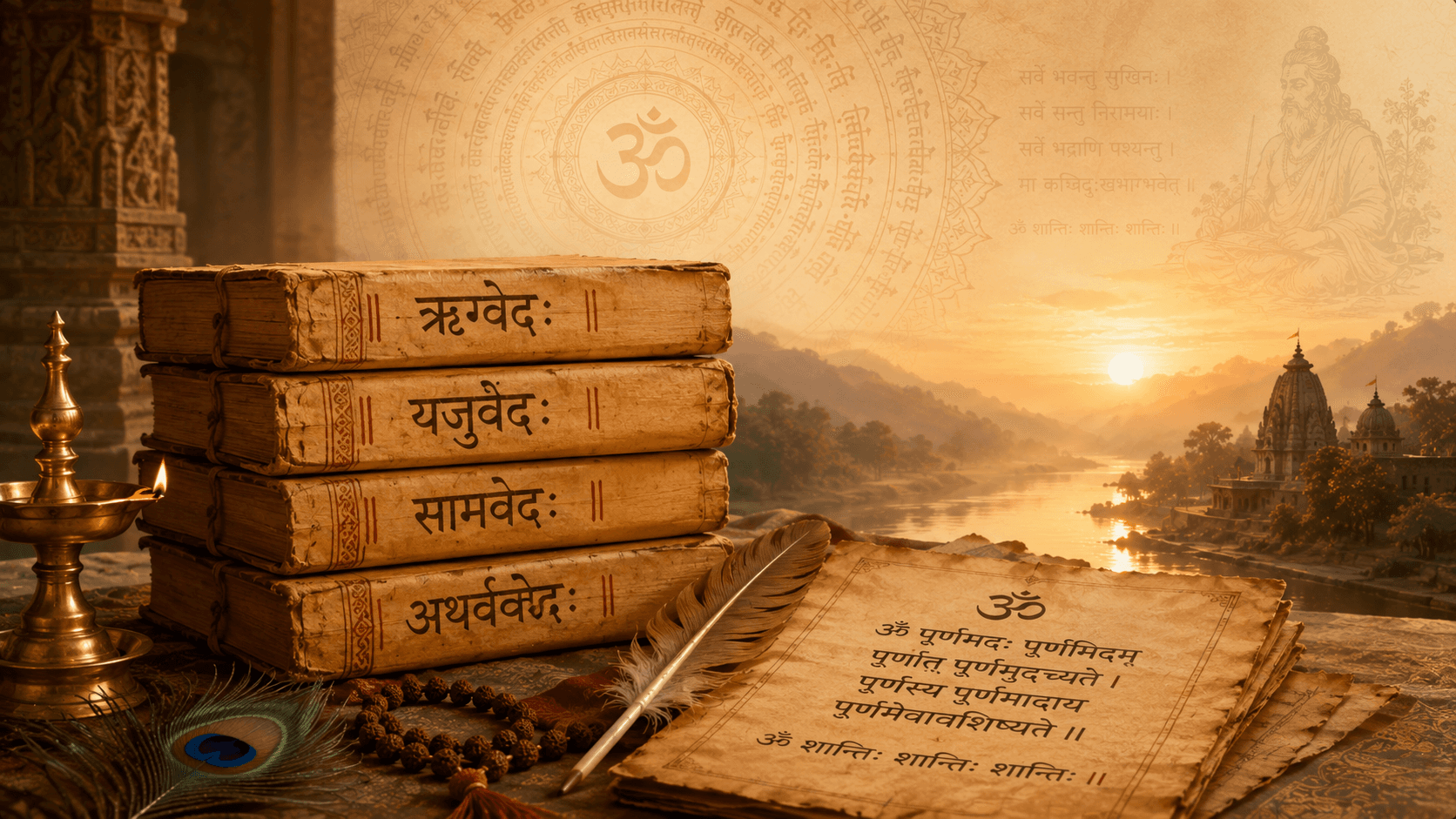
The Vedas
The oldest scriptures — hymns, rituals and philosophy revealed to ancient sages.
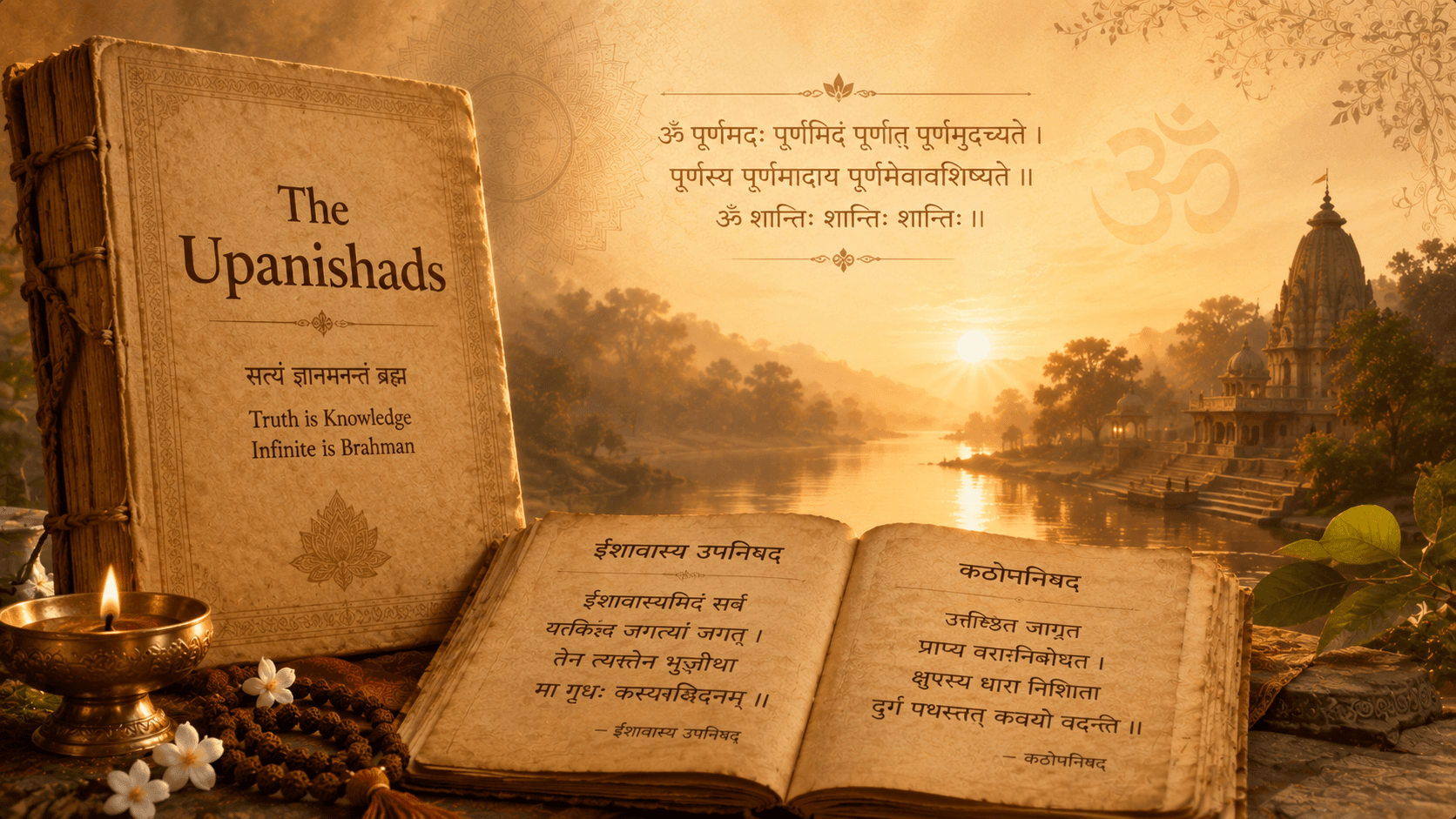
The Upanishads
Philosophical texts exploring the self, the ultimate reality, and liberation.
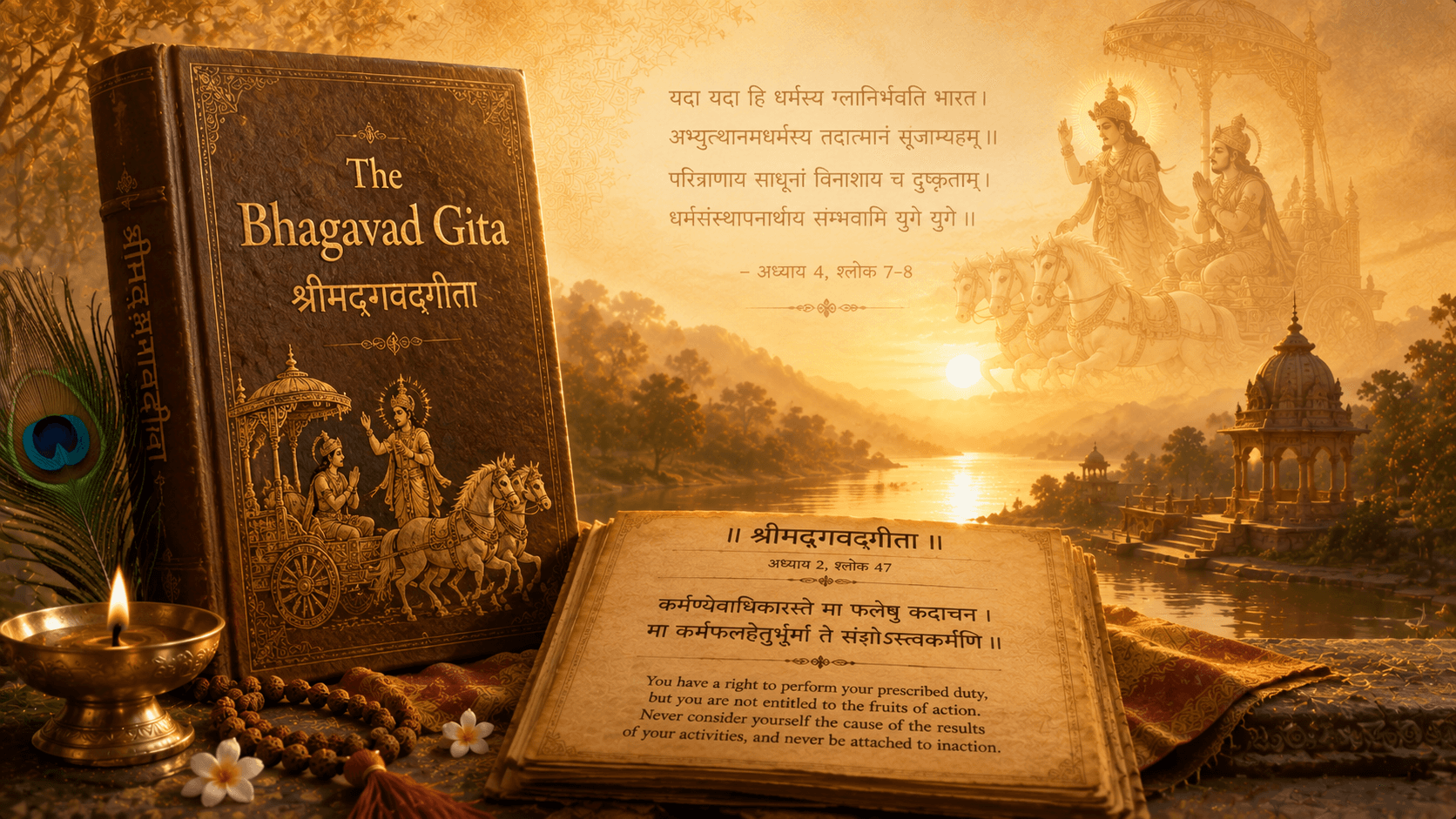
The Bhagavad Gita
Krishna's dialogue with Arjuna on duty, devotion and the nature of reality.
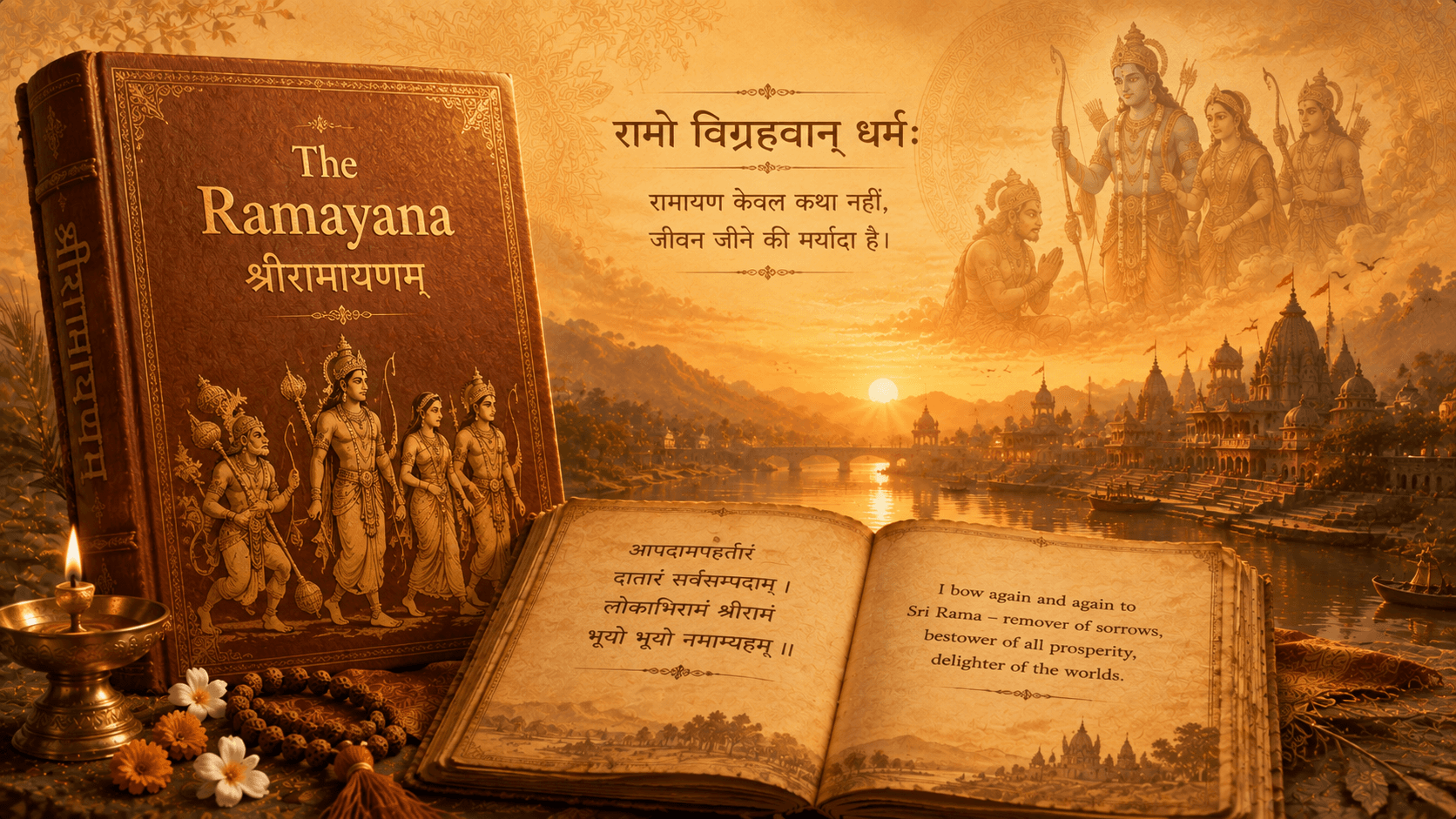
The Ramayana
The epic of Prince Rama — a story of virtue, duty and devotion.
Practices & Traditions
Meditation & Reflection
Quiet daily practice to still the mind and turn attention inward.
Festivals & Rituals
Communal celebrations that mark the rhythm of the spiritual year.
Pilgrimage
Sacred journeys — from local temples to gatherings like the Kumbh Mela.
Selfless Service
Seva offered to community as a living expression of dharma.
Frequently Asked
Is Sanatana Dharma the same as Hinduism?+
Sanatana Dharma is the traditional name for what is commonly called Hinduism today. It translates roughly to "the eternal way" and refers to a way of living rather than a fixed religious institution.
Do I need to be born into it to follow it?+
No. Sanatana Dharma welcomes sincere seekers regardless of background. Its practices and principles are offered as a path anyone can walk.
How can I start learning more?+
Read our Journal for articles on scripture and practice, attend a satsang, or reach out through our Contact page — we're glad to guide you to a starting point.
Continue The Journey
Explore how this wisdom becomes action in our initiatives, or read more in the Journal.