Hindu Religious Texts and Scriptures
Discover Hinduism's sacred wisdom: dive into the Vedas, Upanishads, Bhagavad Gita, and Ramayana, and their impact on spiritual and ethical living today.
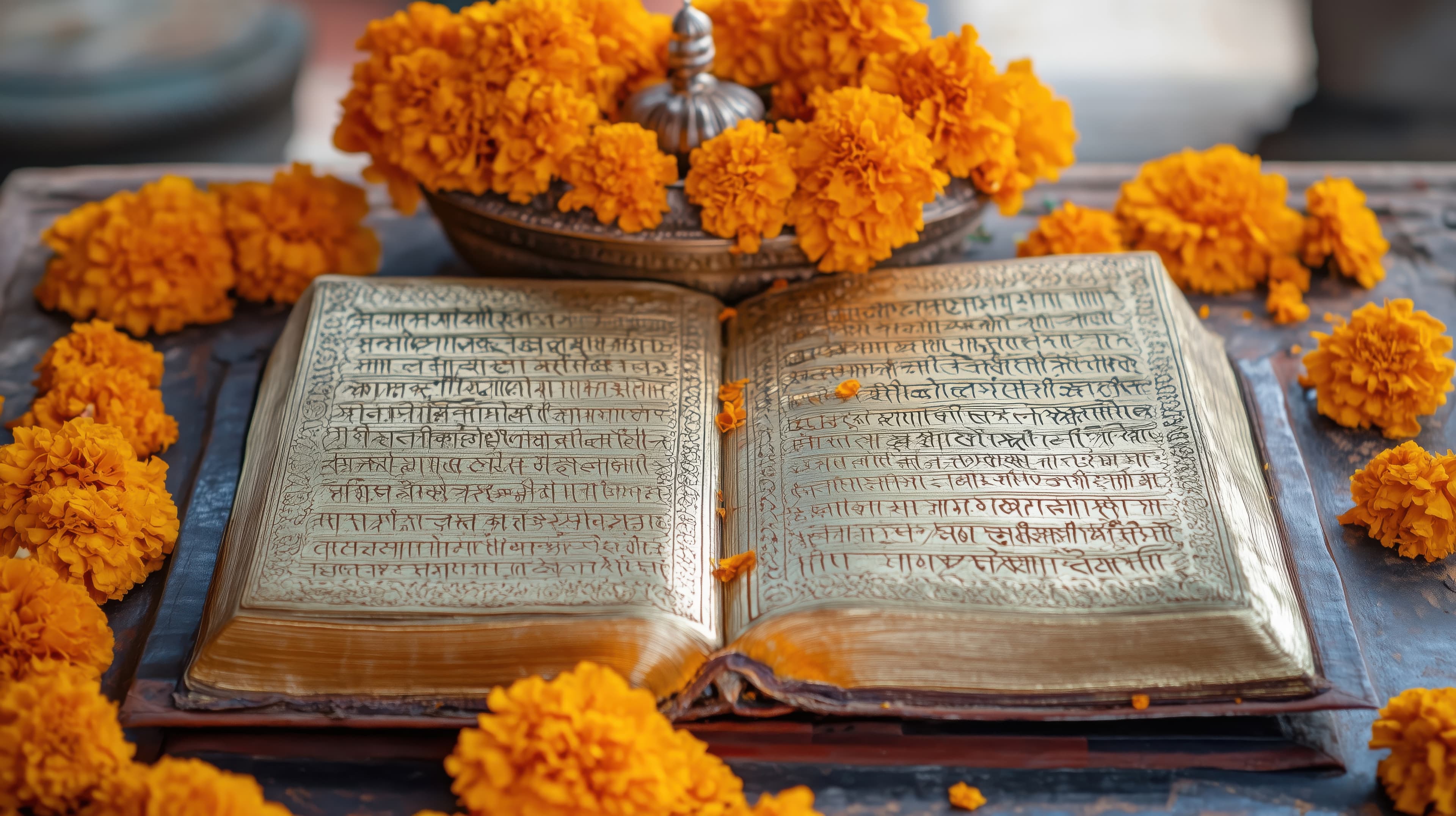
The Vedas: The Bedrock of Hindu Knowledge
Origins and Structure
The Vedas are the oldest and most respected scriptures in Hinduism, believed to have been composed over three millennia ago. These texts, known as "Shruti," meaning "that which is heard," are considered to be divinely revealed to ancient sages, or rishis. The Vedas are divided into four main collections: Rig Veda, Sama Veda, Yajur Veda, and Atharva Veda.
Teachings
The Vedas cover a vast array of knowledge, encompassing hymns, rituals, and philosophical discussions. They explore the nature of the universe, the roles of deities, and the principles of dharma (righteousness). For example, the Rig Veda is rich in hymns dedicated to various deities, while the Yajur Veda is centered around sacrificial rituals. The Sama Veda is renowned for its musical chants, and the Atharva Veda contains spells and incantations meant for daily life.
Relevance Today
Even today, the Vedas remain a wellspring of spiritual inspiration and guidance. They are recited during religious ceremonies and rituals, and their teachings on ethics, duty, and the interconnectedness of all life continue to hold relevance in our modern world.
The Upanishads: The Heart of Hindu Philosophy
Origins and Structure
Composed between 800 and 200 BCE, the Upanishads are a collection of philosophical texts that probe the deeper spiritual meanings of the Vedas. As the final part of the Vedas, they are often referred to as Vedanta, which means "the end of the Vedas."
Teachings
The Upanishads explore profound questions about the nature of reality, the self (atman), and the ultimate reality (Brahman). They emphasize the unity between the individual soul and the universal soul, and the importance of achieving self-realization. Core concepts like karma (action and its consequences), samsara (the cycle of rebirth), and moksha (liberation) are central to their teachings.
Relevance Today
The philosophical insights of the Upanishads continue to shape Hindu thought and practice. They inspire those seeking truth and offer a framework for understanding the spiritual journey. Their focus on meditation, introspection, and the pursuit of knowledge resonates strongly with today's spiritual seekers.
The Bhagavad Gita: The Divine Dialogue
Origins and Structure
The Bhagavad Gita, often simply called the Gita, is a 700-verse scripture that forms part of the Indian epic Mahabharata. It takes the form of a conversation between Prince Arjuna and the god Krishna, who acts as his charioteer, set on the battlefield of Kurukshetra just before a major war.
Teachings
The Bhagavad Gita addresses the moral and philosophical dilemmas that Arjuna faces. Krishna provides profound teachings on duty (dharma), righteousness, and the nature of reality. The Gita outlines various paths to spiritual realization, such as Karma Yoga (the path of selfless action), Bhakti Yoga (the path of devotion), and Jnana Yoga (the path of knowledge).
Relevance Today
The Bhagavad Gita remains a timeless guide for navigating life's challenges. Its teachings on duty, detachment, and devotion offer practical wisdom for personal growth and ethical living. The Gita's universal message crosses religious boundaries, making it meaningful to people of all backgrounds.
The Ramayana: The Epic of Virtue
Origins and Structure
The Ramayana, authored by the sage Valmiki, is one of the two great Indian epics, along with the Mahabharata. It recounts the life and adventures of Prince Rama, his wife Sita, and his devoted companion Hanuman.
Teachings
The Ramayana is a story of virtue, duty, and devotion. It exemplifies the ideals of dharma through its characters—Rama, who personifies righteousness, and Sita, who symbolizes purity and loyalty. The epic also underscores the significance of family, friendship, and the victory of good over evil.
Relevance Today
The Ramayana remains a profound source of moral and spiritual guidance. Its stories are recited and reenacted during festivals and religious ceremonies, reinforcing values such as integrity, courage, and devotion. The epic's enduring lessons continue to inspire individuals to lead virtuous lives and fulfill their duties.
Conclusion
Hinduism's sacred texts and scriptures offer a vast reservoir of spiritual wisdom and practical guidance. From the ancient hymns of the Vedas to the philosophical depths of the Upanishads, the profound teachings of the Bhagavad Gita, and the epic narratives of the Ramayana, these texts continue to influence the spiritual and cultural fabric of Hinduism. Their teachings remain relevant, providing insight and inspiration for navigating the complexities of modern life.